How to Prevent Wall Cracking with Wall Mesh?
Why Do Non-Structural Walls Need Bracing?
In modern structural engineering, non-structural walls, also known as infill walls, make up a major portion of a building's architectural components. Although these elements do not bear the gravity loads of roofs and beams, they are highly vulnerable to lateral forces caused by earthquakes. Without reinforcing systems like wall mesh, these walls are prone to extensive cracking and even sudden collapse during an earthquake. Statistical studies have shown that a large portion of financial and human losses in past earthquakes resulted from the collapse of these very non-structural walls.
To better understand the behavior of non-structural walls, there are useful international engineering studies. For further reading, it is recommended to visit retrofitting non-structural walls with wall mesh to become familiar with global standards. In traditional construction, bed joint reinforcement or angle iron bracing were common methods, but today engineers are shifting toward this technology due to the countless advantages of modern systems.
At the Novin Wall Mesh department, by thoroughly examining these needs, we provide engineered solutions that not only prevent structural cracks but also enhance the overall safety of the structure. For more information, you can visit the Novin Wall Mesh department and benefit from the specialized consultations of our experts.
Root Cause Analysis of Plaster and Cement Cracks
Wall cracking is one of the most common problems in the construction industry, which both mars the aesthetic aspect of the structure and can indicate serious defects in wall stability. Uneven foundation settlements, severe temperature changes, material shrinkage during drying, and vibrations caused by traffic or wind are among the main factors causing these cracks. When a wall is subjected to shear stresses, the plastering on it yields and hairline or deep cracks appear.
To avoid these additional costs, awareness of material and equipment prices plays a key role. You can read useful information regarding wall mesh prices and the role of mesh in preventing wall plaster cracks. Also, choosing the type of material has a direct impact on the final durability of the work. Typically, wall cracks, if not braced in time, will spread over time and damage the underlying layers.
Using appropriate reinforcement systems can uniformly distribute the applied stresses across the wall surface. To get acquainted with supplementary standards for concrete and plaster execution, you can take a look at the reliable source retrofitting non-structural walls with wall mesh to gain a more comprehensive perspective.

What is the Wall Mesh System and How Does It Work?
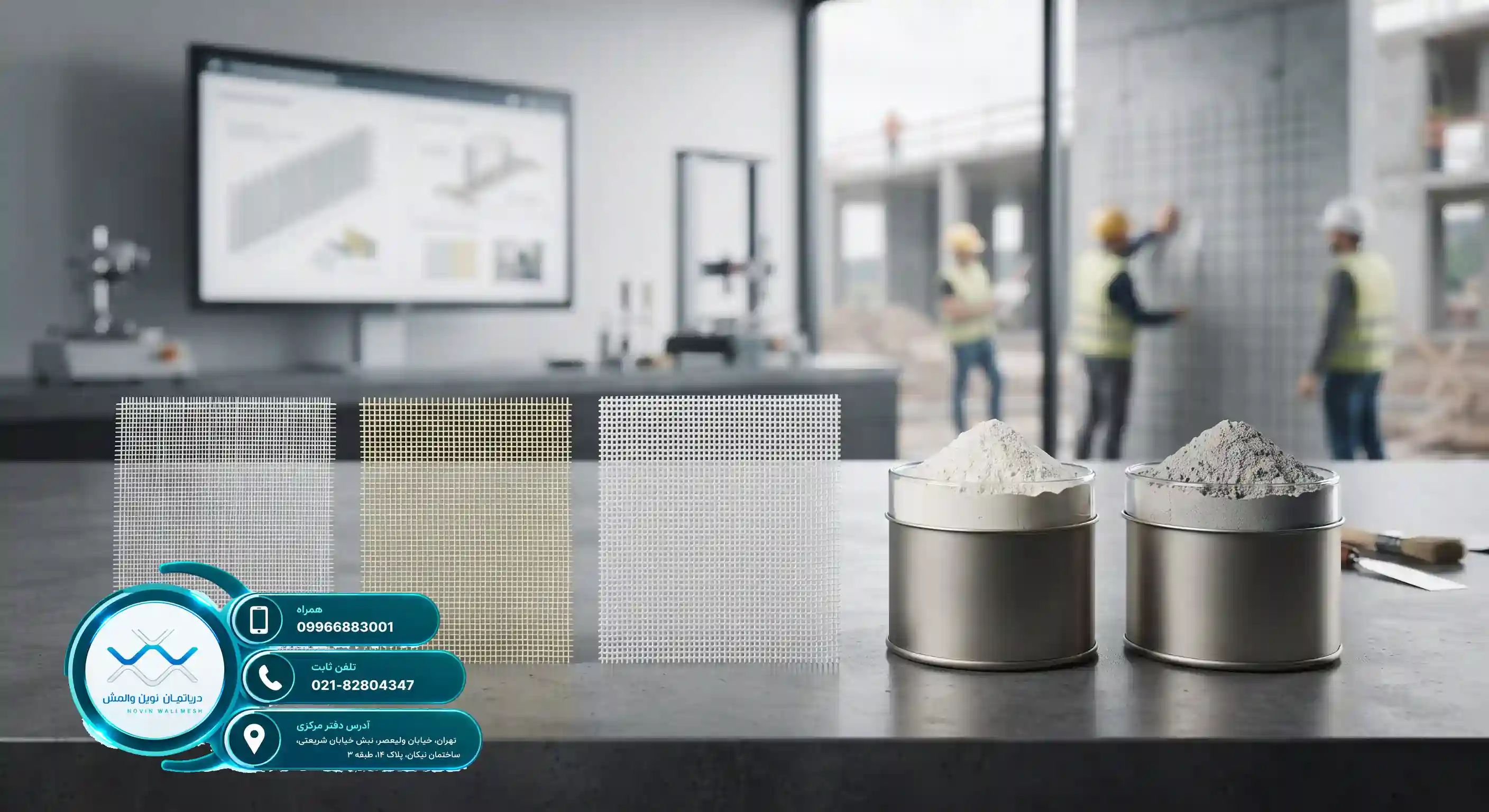
Wall mesh technology has been introduced as a modern and highly efficient alternative to traditional wall bracing methods (such as heavy steel angle bracings). This system consists of fiberglass mesh networks (E-Glass, C-Glass, and Zr-Glass) along with gypsum- or cement-based plasters. The operation of this system is such that the fiberglass mesh is installed on the wall surface and then covered with a layer of plaster to create structural integrity.
Among the prominent advantages of this technology are the elimination of hazardous welding in the workshop, reduction of the building's dead weight, high execution speed, and extraordinary flexibility against lateral forces. To carefully review implementation costs and project optimization, it is suggested to read the specialized article how to reduce maintenance costs with wall mesh calculations? to become familiar with the engineering principles of calculations.
The general and comparative specifications of the main components of this system are provided in the table below:
| Component Name |
Material |
Main Application |
| E-Glass Mesh |
Standard fiberglass |
General reinforcement and retrofitting of interior walls |
| Gypsum-Based Plaster |
Engineered modified gypsum |
Final finish for dry interior surfaces |
| Cement-Based Plaster |
Cement and polymer additives |
Moisture-resistant coating for external environments |
Smart Selection of Fiberglass Mesh Based on Project Conditions
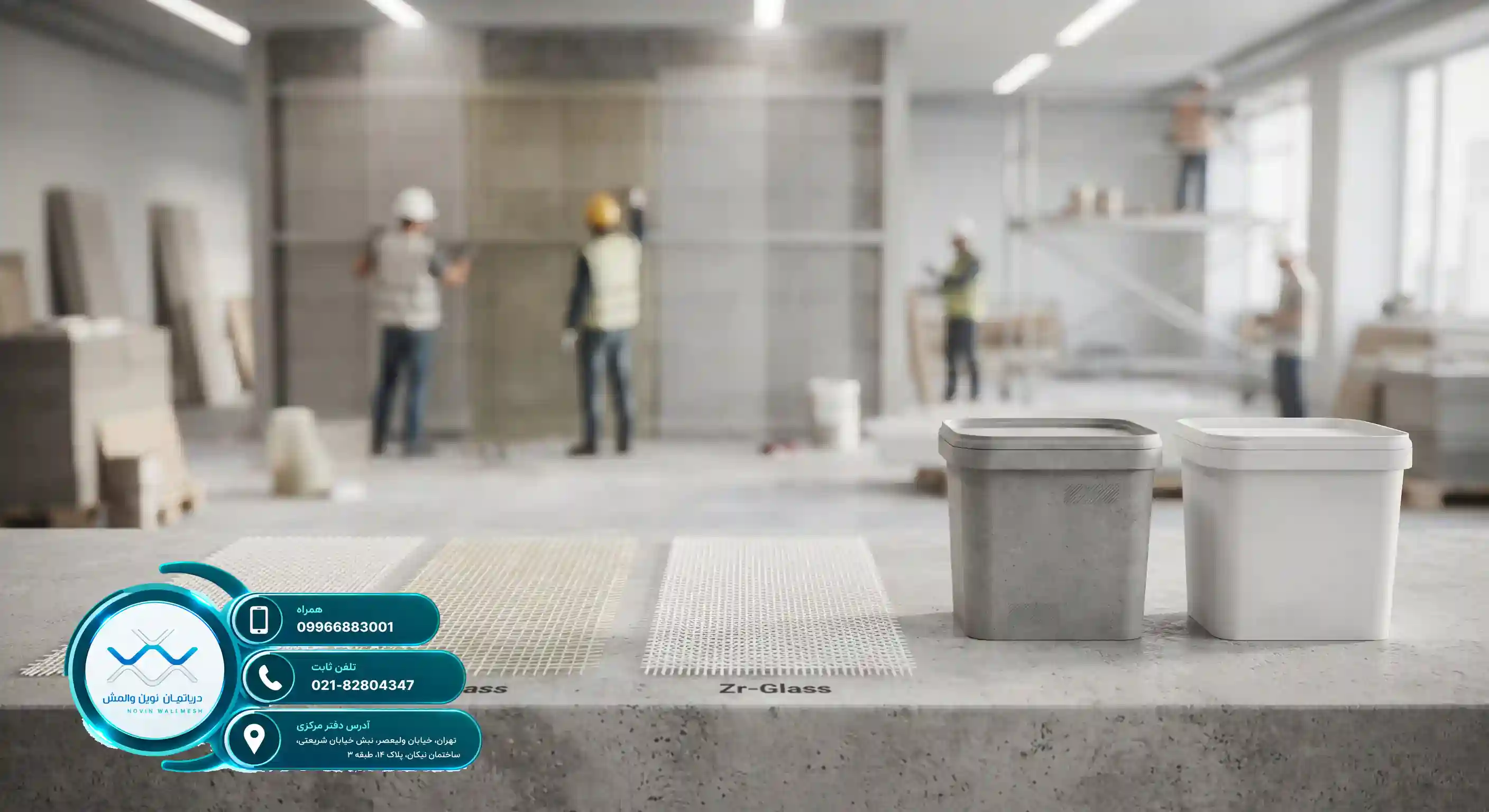
In the execution of a successful construction project, choosing the type of fiberglass mesh is of high importance. The difference between manufactured mesh types such as E-Glass, C-Glass, and Zr-Glass lies in their tensile strength, resistance to alkaline environments, and type of polymer coating. For example, alkali-resistant meshes (Zr-Glass) are the best option for humid environments or cement plasters that have high alkalinity.
Project managers are always looking to optimize costs without sacrificing quality. Reading the article comparison of domestic wall mesh price with imported mesh from Turkey provides a completely clear perspective on project economics and selecting the most cost-effective materials. The table below offers a more detailed comparison among these products:
| Mesh Type |
Alkaline Resistance |
Best Application |
| E-Glass Mesh |
Moderate |
Interior walls and dry spaces |
| C-Glass Mesh |
Good |
Special and chemical coatings |
| Zr-Glass Mesh |
Very high |
Facades and humid cement environments |
To receive specialized consultations regarding the purchase and implementation of products, you can visit the website Novin Wall Mesh department and communicate with the sales engineers.
Step-by-Step to Standard Implementation of the Reinforcement System
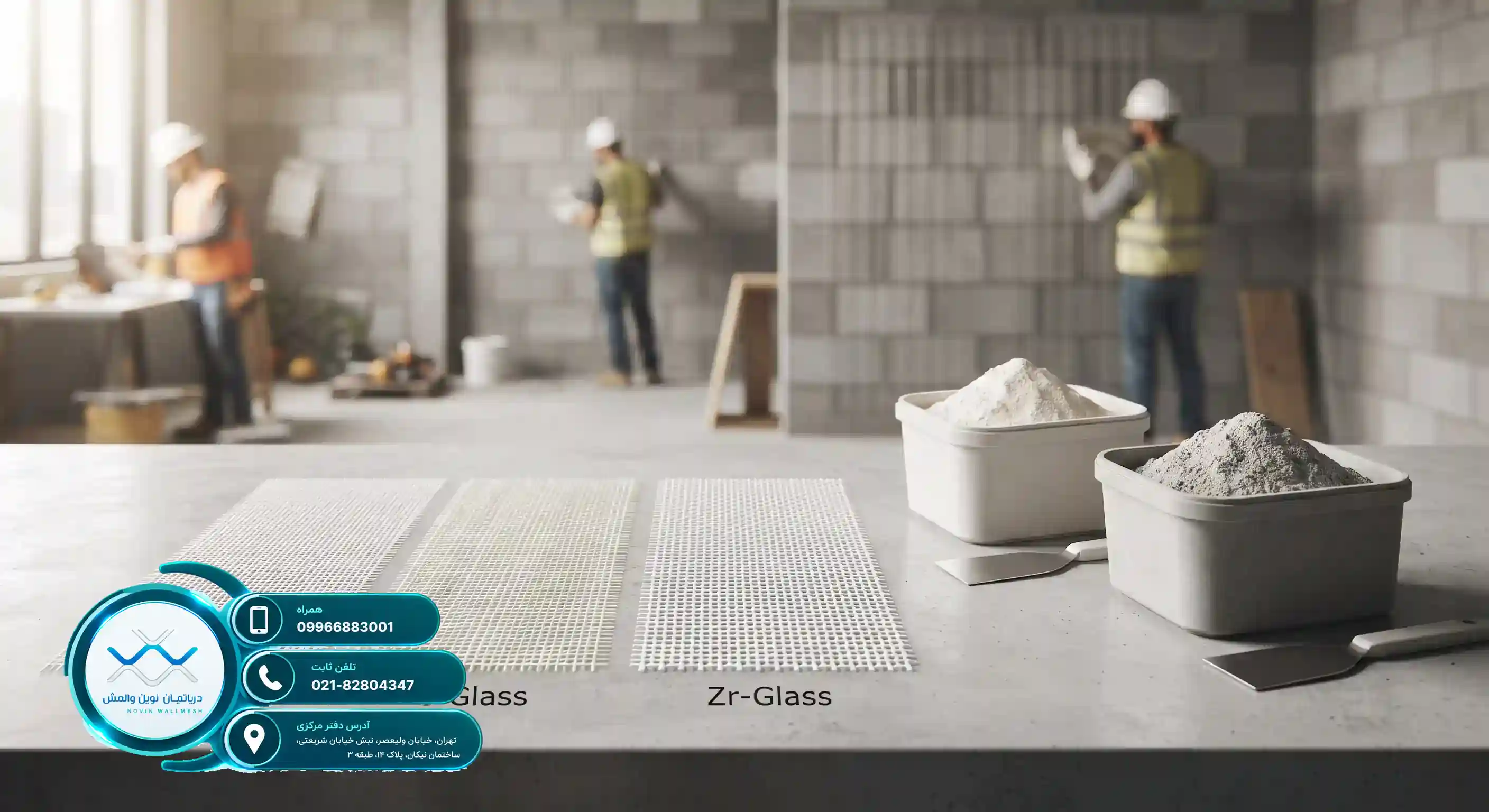
Correct and principled implementation of wall mesh guarantees its optimal performance during an earthquake and prevents subsequent cracking. The execution steps briefly include preparing the wall surface, installing U-tracks or guide connections, gluing or fixing the fiberglass mesh, and finally applying the plaster over the grid. Each of these steps must be performed carefully and under the supervision of a resident inspector.
Before starting execution, cleaning the wall surface from any dust, grease, or loose particles is mandatory. Then the fiberglass mesh is cut to specified dimensions and spread over the wall. Using high-quality gypsum- or cement-based plasters supplied by the Novin Wall Mesh department establishes the necessary bonding between the fibers and the wall surface. Observing the thickness of the plaster layer is vital; because low thickness leads to incomplete fiber coverage and excessive thickness increases the dead load.
Precise execution of installation details in wall mesh makes the difference between a safe structure and a vulnerable one.
For more information on how to procure standard products, drop by the Novin Wall Mesh department.
Why is the Type of Plaster Vital in the Wall Mesh System?
Plasters in retrofitting systems act as binders and stress distributors. The choice between gypsum-based plaster or cement-based plaster entirely depends on the environmental conditions of the project. Gypsum plasters are ideal for interior and dry spaces of the building, creating a smooth surface ready for painting, while cement plasters with high moisture resistance are used for exterior environments, parking lots, and damp walls.
The combination of these plasters with fiberglass mesh prevents stress concentration at a specific point and stops the occurrence of shrinkage cracks. This feature directly reduces the building's future maintenance and repair costs. Our specialists at the Novin Wall Mesh department provide the highest adhesion for your structure by offering advanced plaster formulations.
The use of quality materials guarantees the long-term lifespan of walls. To get more acquainted with our products, visit the official website of the Novin Wall Mesh department.
Smart Investment to Reduce Long-Term Costs
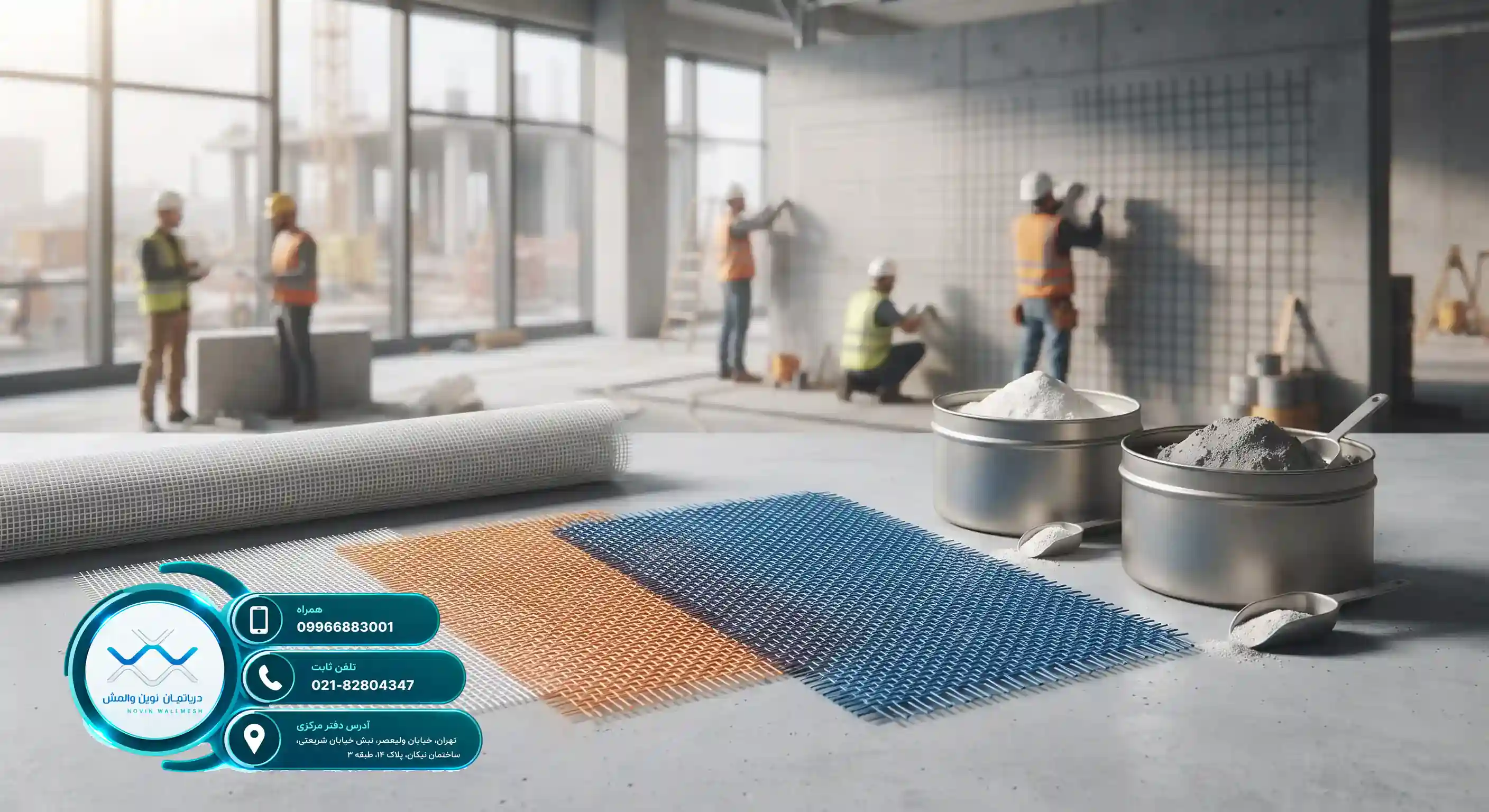
One of the main concerns of developers and owners is the exorbitant costs of building maintenance and repair after occupancy. Frequent cracking of internal and external walls not only destroys the beauty of the building but also brings heavy financial costs for puttying, painting, and structural repairs. By principled application of wall mesh, these costs are drastically reduced because the fiberglass mesh network acts as a permanent brace and prevents local movements of the wall.
Economic evaluations show that the initial investment for purchasing mesh and plaster is very cost-effective in the long run compared to the damages resulting from the destruction of traditional walls in earthquakes. As a sustainable solution, this system creates high added value for the property. The engineers of the Novin Wall Mesh department are ready to offer you the best solution by providing accurate financial and technical analyses.
Moving Toward Safer, Lighter, and More Sustainable Structures
The construction industry worldwide is moving at an unbelievable speed toward the use of composite and lightweight materials. Technologies such as fiber reinforcement systems have replaced cumbersome traditional methods and simultaneously enhanced safety and execution speed. In Iran as well, engineers and designers, by welcoming these technologies, have taken a giant step toward making buildings safe against earthquakes.
The mission of the Novin Wall Mesh department has always been to elevate the qualitative level and safety of Iranian structures relying on up-to-date world standards. By choosing our engineered products, secure an environment for your building that is safe and free of cracking worries. To start cooperation and technical consultation with our experts, please refer to the Novin Wall Mesh department.
| Question |
Answer |
| What is a wall mesh? |
It is a modern system consisting of fiberglass mesh and plaster used to brace non-structural walls and prevent cracking. |
| Why should we use wall mesh instead of angle iron bracing? |
It is lighter, requires no welding, has a higher execution speed, and shows better performance during earthquakes. |
| What is the difference between E-Glass and Zr-Glass mesh? |
The Zr-Glass model has much higher resistance to alkaline environments and moisture, making it more suitable for facades. |
| What type of plaster is used in wall mesh? |
Depending on the environment, gypsum-based (interior spaces) or cement-based (exterior and damp spaces) plasters are used. |
| Does wall mesh prevent wall plaster from cracking? |
Yes, the fiberglass mesh network distributes stresses and prevents thermal and structural cracks on the wall. |
| How is the cost of wall mesh execution calculated? |
The cost depends on the wall dimensions, type of mesh used, total square footage, and type of plaster. |
| Is the use of wall mesh approved by building codes? |
Yes, this system fully complies with the guidelines of the Road, Housing and Urban Development Research Center. |
| How long does wall mesh installation take? |
Due to the lack of need for heavy welding operations, its execution speed is much faster than traditional methods. |
| Can wall mesh be installed in buildings already in service? |
Yes, it can be easily implemented with minor chipping of the plaster and applying the system onto the wall. |
| How can one procure products from the Novin Wall Mesh department? |
By visiting the website of the Novin Wall Mesh department, you can place your order and receive consultation. |
Specialized Reference of Novin Wall Mesh Department - Modern Solutions for Retrofitting Non-Structural Walls (https://civildep.ir/)
:: برچسبها:
How to Prevent Wall Cracking with Wall Mesh? ,
:: بازدید از این مطلب : 0
|
امتیاز مطلب : 0
|
تعداد امتیازدهندگان : 0
|
مجموع امتیاز : 0


 عضو شوید
 عضویت سریع
 آمار مطالب
 آمار بازدید


