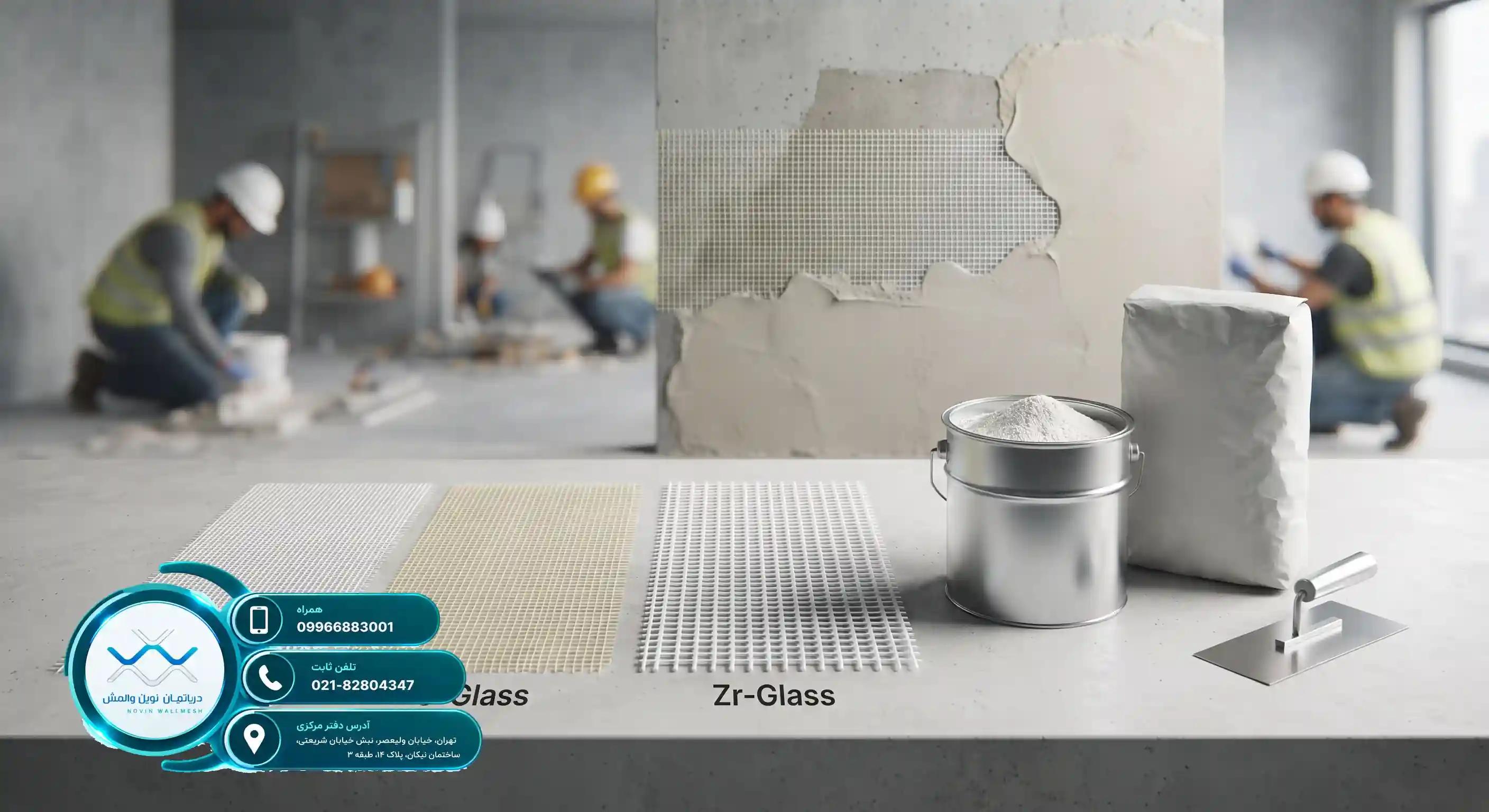
The Impact of Mesh Overlap on the Final Performance of Wall Mesh Plaster
Introduction to the Importance of Overlap in Reinforcement Systems
In the world of structural engineering and retrofitting, non-structural walls have always been vulnerable points against lateral forces such as earthquakes. The use of modern technologies such as wall mesh plaster has brought about a widespread transformation in this field. However, the correct implementation of this system requires strict adherence to execution details, one of the most vital of which is the amount and method of overlapping the fiberglass meshes.
When shear and tensile forces caused by an earthquake are applied to the wall, the imposed loads must be transferred to the fiber network through the plaster matrix. If this network is not executed seamlessly and with appropriate continuity, the load transfer chain at the connection points will rupture. For this reason, mastering the engineering principles of mesh overlap plays a decisive role in the final performance of the structure, and supervising engineers must pay special attention to this topic.
The Structural Role of Fibers in Wall Continuity
The fiberglass mesh network acts as the primary reinforcing element. The quality of the fibers used has a direct impact on the overall behavior of the system; as discussed in detail in the specialized article The Impact of Fiber Quality on the Final Price and Purchase of Wall Mesh regarding the economic and technical value of this material. When meshes are placed side by side, their edges must fall over each other by a specified amount so that stresses are easily transferred from one piece to another.
If you are looking to compare this technology with traditional methods, reading the article Price Comparison of Fiberglass Wall Mesh with Rabitz Mesh in Wall Reinforcement will give you a more comprehensive perspective. Ultimately, failure to comply with overlap principles can call the entire engineering calculations of the system into question and severely reduce the overall efficiency of the wall.
Determining Exact Overlap Dimensions Based on Codes
One of the most frequent questions from contractors and designers is how to determine the exact amount of mesh overlap in the execution of wall mesh plaster. Executive codes and guidelines of the Road, Housing and Urban Development Research Center have specified minimum sizes for the transverse and longitudinal overlaps of fiberglass meshes to maintain tensile continuity.
Typically, the standard overlap amount varies between 10 to 15 centimeters depending on the mesh type, unit weight, and loading type. In environments where high stresses are likely, this value can even increase. Failing to comply with this standard size means creating localized weaknesses throughout the wall body, which appear as cracking or rupture points during an earthquake.
Analysis of Stress Transfer at Connection Points
Force transfer at the mesh overlap location occurs based on the adhesion phenomenon between the fibers and the cementitious or gypsum matrix. When two layers of mesh are placed on top of each other, the thickness of the plaster layer in that area increases slightly, which engineers must take into account in the final skim coat.
In addition, the choice of plaster type is also very important in this process. According to global standards such as the technical guidelines of wall mesh gypsum plaster, using high-quality materials compatible with the mesh ensures that a better mechanical bond is formed at the overlap location and the likelihood of fibers slipping over each other is reduced to zero.
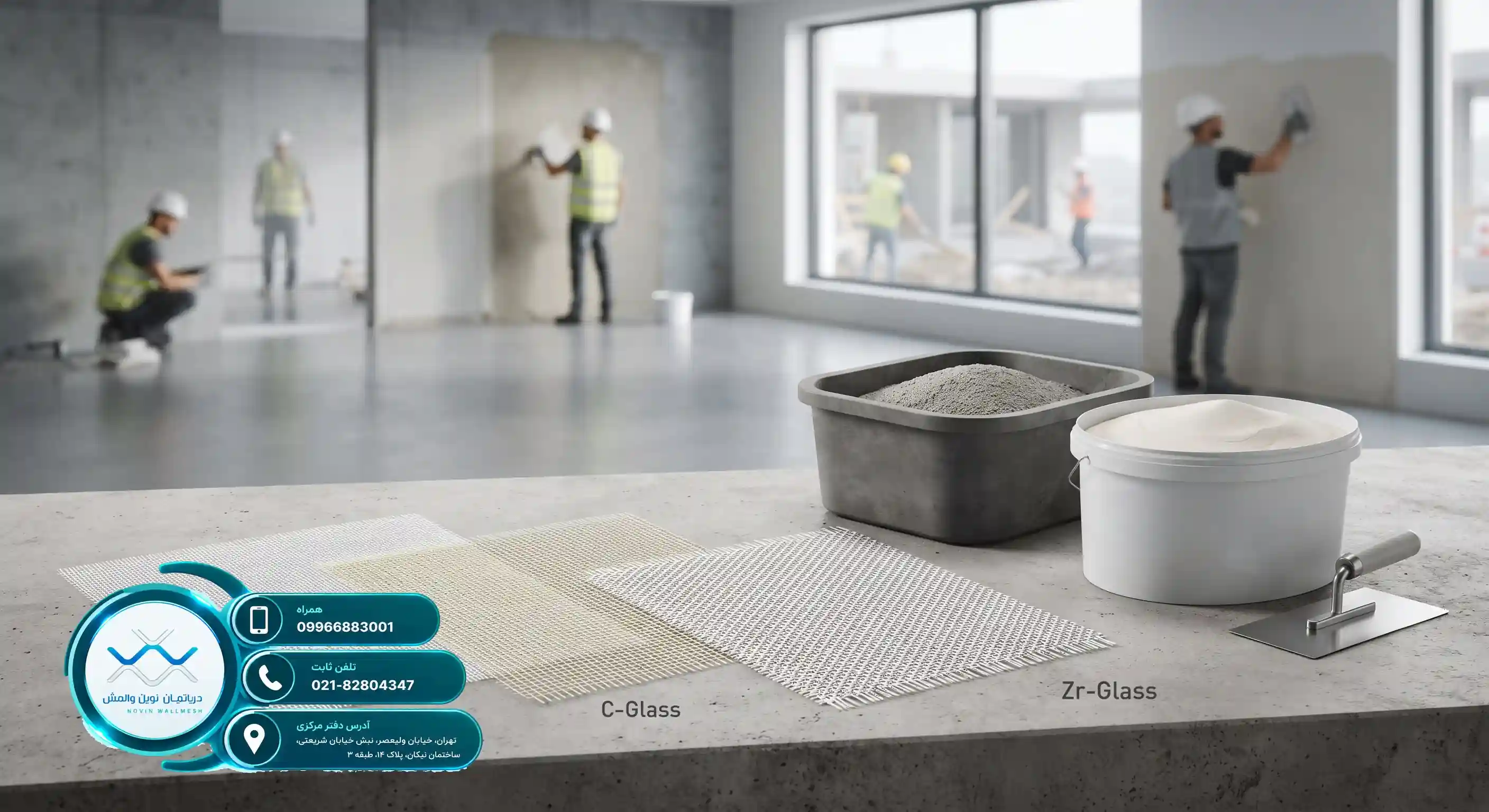
Technical and Executive Consequences of Deficiencies in Mesh Overlap
If, during the execution of wall mesh plaster, overlap regulations are ignored and meshes are installed with a gap or with an overlap less than the standard limit, it will bring irreparable consequences for the structure. The first and most obvious consequence is the appearance of deep cracks on the wall surface after drying or as a result of the slightest structural settlements.
On a larger scale, this defect causes the loss of integrity of the reinforcement system. When earthquake force is applied to the wall, instead of acting as a single network, the fibers turn into separate pieces and each section behaves independently, which leads to premature collapse of the wall at loads lower than the design limit.
Functional Comparison in Different Environmental Conditions
In special construction projects, environmental conditions such as high humidity can be challenging. For example, in damp spaces, the resistance of materials becomes doubly important, which is well examined in the article Price Comparison of Fiberglass Wall Mesh vs Carbon Mesh in Damp Walls. In such environments, if the mesh overlap is not done properly, moisture penetration to the underlying layers through improper joints can severely accelerate the rate of degradation.
Also, reputable international companies such as wall mesh gypsum plaster emphasize that the precise execution of connection details guarantees the long-term durability of the system against thermal and mechanical stresses.
Parametric Evaluation of the Impact of Overlap on Wall Mesh Efficiency
To better understand the technical importance of mesh overlap in the wall mesh plaster system, reviewing experimental and engineering data is very helpful. The following table provides a comprehensive comparison between different overlap execution modes and their impact on the final behavior of the wall to provide execution engineers with a practical perspective.
| Overlap Status |
Overlap Amount |
Stress Transfer |
Earthquake Resistance |
| Non-standard (Low) |
Less than 5 cm |
Poor and Disjointed |
High probability of localized failure |
| Engineering Standard |
10 to 15 cm |
Complete and Continuous |
Excellent and optimal performance |
| Excessive (Safe but Costly) |
More than 25 cm |
Complete |
Desirable but uneconomical |
Analysis of Table Data
As seen in the table, executing an overlap below the standard limit directly endangers structural safety. On the other hand, excessive overlap lacks economic justification and unnecessarily drives up material and execution costs. Therefore, strict compliance with the tolerances announced by design engineers is the key to achieving a balance between project economics and structural safety.
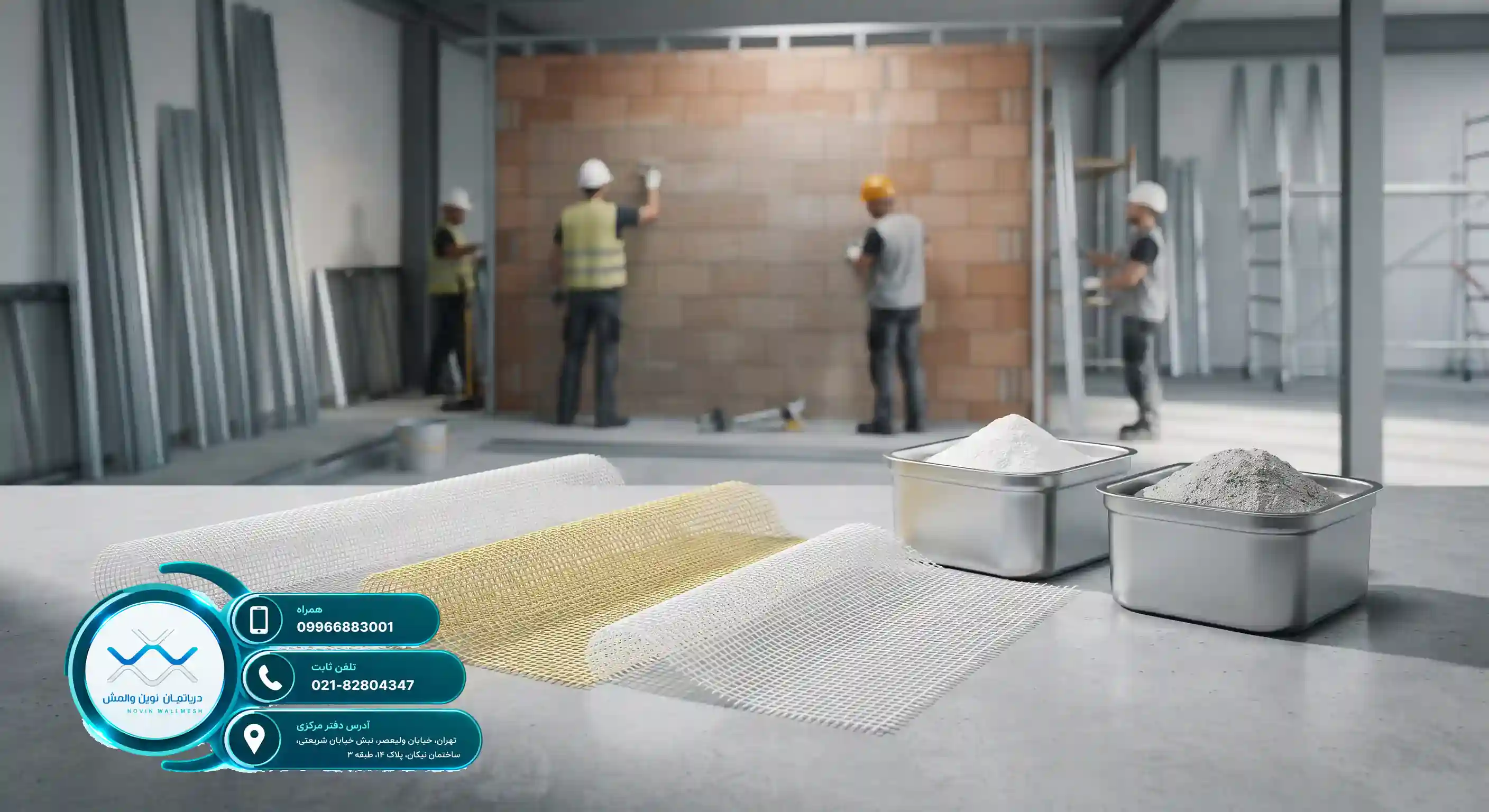
Operational Stages of Mesh Installation and Overlap Compliance
Flawless execution of the wall mesh plaster system on a construction site requires following a regular sequence of construction operations. Before starting the plastering operations, execution teams must carefully cut the fiberglass meshes and place them on the wall surface.
The first step involves sub-base preparation and cleaning the wall surface from any contamination, dust, or debris. After installing the initial layer of plaster (cement or gypsum base), the meshes are placed onto the work. At this stage, attention to the adjacent edges of the mesh is vital. The mesh edges must overlap by at least 10 to 15 centimeters, and no empty space or folding should be created at the intersection.
Key Points for Site Supervision
Supervising engineers must carefully inspect the following items during their inspections:
- Ensuring there are no gaps between adjacent mesh pieces
- Controlling exact overlap dimensions using measuring tools
- Sufficient embedding of the mesh in the plaster layer to remove air bubbles
- Compliance with fiber direction interference in corners and openings
By observing these simple yet vital principles, the quality of reinforcement execution will reach its highest level and the overall performance of the system against lateral loads will be guaranteed.
Identifying Execution Errors and Corrective Methods
In civil engineering projects, execution errors are sometimes unavoidable. The following table has been prepared for quick troubleshooting and providing corrective solutions regarding issues related to mesh overlap in the wall mesh plaster system so that technical teams can quickly resolve challenges.
| Type of Error |
Cause of Occurrence |
Technical Consequence |
Corrective Solution |
| Insufficient Overlap Width |
Installer inaccuracy or material shortage |
Crack formation at the joint line |
Installing a supplementary mesh piece over the joint with sufficient overlap |
| Excessive Bulging at Overlap Location |
Overlap of multiple thick layers |
Difficulty in executing the final skim coat |
Local scraping of excess plaster before final drying |
| Mesh Folding and Wrinkling |
Insufficient mesh tension during installation |
Reduction of local tensile strength |
Removing the defective piece and replacing it with flat mesh |
The Importance of Continuous Inspections
The presence of this table in workshop guidelines helps quality engineers identify execution defects in the shortest possible time and prevent them from turning into larger structural flaws. Careful supervision during work drastically reduces the cost of subsequent repairs.
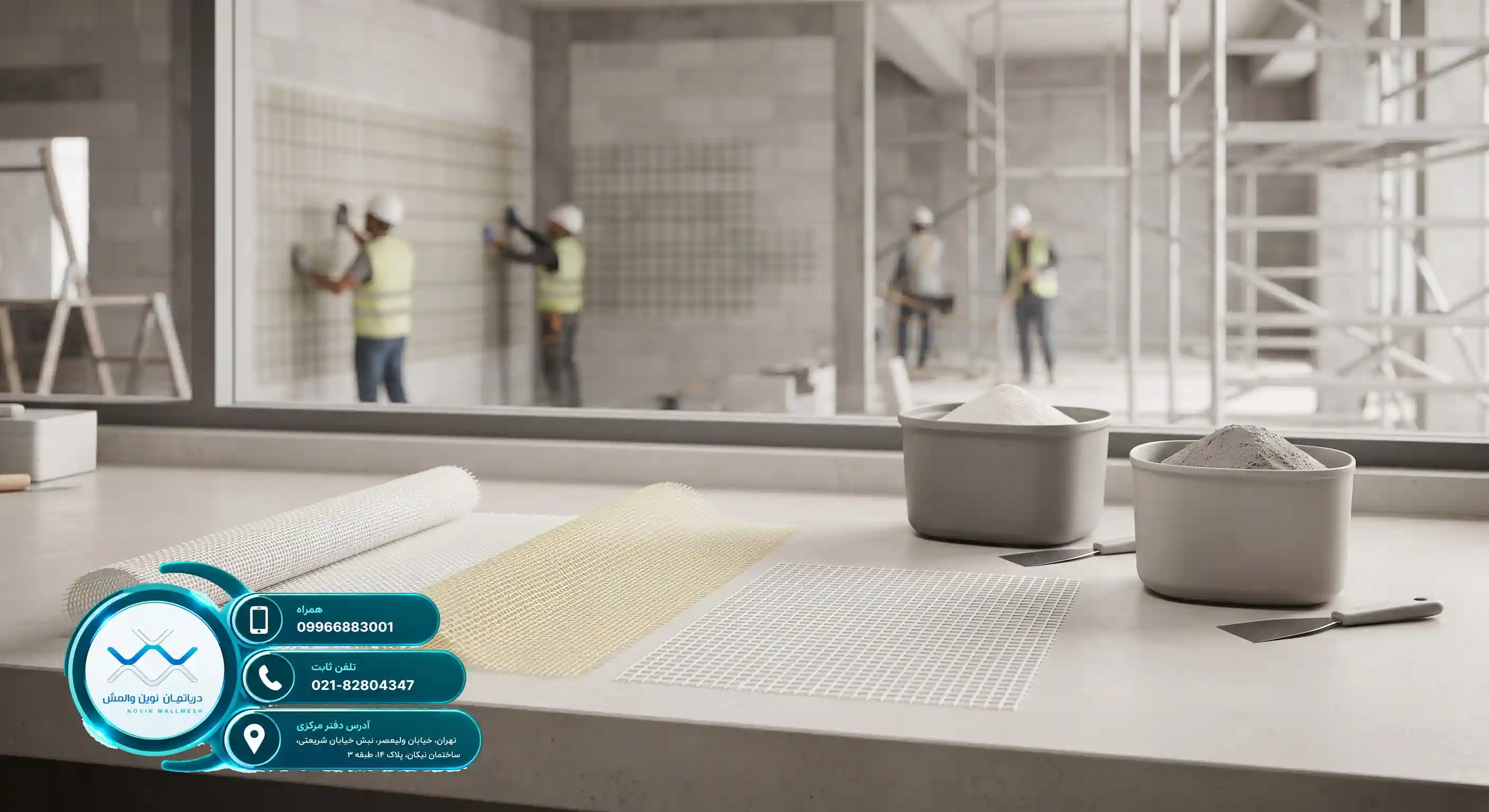
Harmony Between Fiberglass Mesh and Plaster
The final performance of wall mesh plaster does not solely depend on the quality of the mesh itself; rather, the synergy between the fiberglass fibers and the plaster matrix (gypsum or cement base) is the main determinant of structural durability. When the mesh overlap is executed correctly, the plaster must be able to fully penetrate and fill the empty space between the fiber strands.
If the adhesion of the plaster is not sufficient, even with precise adherence to overlap dimensions, the layers may separate from each other under shear. For this reason, the use of polymer additives and standard plasters is of special importance. The engineered products of the Novin Wall Mesh department are formulated to create the highest level of adhesion and compatibility with various types of fiberglass meshes.
Specialized Recommendations for Flawless Execution
To achieve the best result in executing retrofitting systems, observing the following is mandatory:
- Selecting the plaster type appropriate for the project's climate conditions (cement base for wet spaces and external facades, gypsum base for interior spaces)
- Ensuring proper curing (watering) of the cement plaster to gain final strength
- Strict supervision of the plaster layer thickness over the mesh overlap locations
Paying attention to these small technical details guarantees the long-term stability of non-structural walls against severe earthquake tremors and prevents repair and reconstruction costs.
Upcoming Innovations in the Wall Mesh Industry
The building retrofitting industry is advancing at an unbelievable speed, and the wall mesh plaster system as one of the most efficient methods is evolving day by day. With the introduction of new fibers with higher tensile strength and advanced plasters, execution standards are also moving toward greater precision.
In the near future, the use of digital tools and computer simulations to accurately determine critical points and the optimal amount of mesh overlap in large projects will become commonplace. The ultimate goal of all these technologies is to increase the safety factor of structures, reduce the dead weight of the building, and optimize execution costs for employers.
Novin Wall Mesh Department's Commitment to Quality
At the Novin Wall Mesh department, by providing engineered products consistent with modern world standards, we are always alongside engineers and construction industry contractors. Providing innovative solutions, specialized consultations, and supplying high-quality materials is a step toward enhancing the safety and durability of Iranian structures against natural disasters.
By correctly applying execution methods and paying special attention to details such as standard mesh overlap, we can forge a safer and more secure future for the country's construction industry and bring peace of mind to building residents.
| Question |
Answer |
| What is the standard amount of mesh overlap in wall mesh? |
The minimum standard amount is between 10 to 15 centimeters, which is determined depending on the mesh type and project specifications. |
| Does failure to observe sufficient overlap cause cracks? |
Yes, reducing the overlap causes the loss of tensile continuity and creates local and structural cracks in the wall. |
| Does the type of plaster affect the quality of the mesh connection point? |
Yes, using standard plasters with high adhesion plays an important role in the correct transfer of stress at the overlap location. |
| Why is excessive mesh overlap not recommended? |
Because in addition to increasing material purchase costs, it causes bulges on the surface and problems in finishing work. |
| What is the role of fiberglass fibers in the wall mesh system? |
Fiberglass fibers act as the main reinforcing element, absorbing and distributing shear forces caused by earthquakes. |
| What is the difference between gypsum and cement plaster in wall mesh execution? |
Gypsum plaster is used for interior spaces and cement plaster is used for damp spaces and external facades. |
| How can execution errors at the overlap location be corrected? |
By installing supplementary pieces of mesh with sufficient overlap over weak points before the final drying of the plaster. |
| Is site inspection of mesh overlap necessary? |
Yes, close supervision by the supervising engineer on overlap dimensions and installation quality prevents critical errors. |
| Can Rabitz meshes be used instead of fiberglass mesh? |
No, Rabitz does not have the necessary efficiency, and fiberglass wall mesh is preferred due to its lighter weight and better continuity. |
| How can products of the Novin Wall Mesh department be procured? |
Through communication with the technical and sales experts of the Novin Wall Mesh department and visiting the collection's official website. |
Executive instructions and technical regulations of the Road, Housing and Urban Development Research Center regarding non-structural wall retrofitting.
:: برچسبها:
The Impact of Mesh Overlap on the Final Performance of Wall Mesh Plaster ,
:: بازدید از این مطلب : 0
|
امتیاز مطلب : 0
|
تعداد امتیازدهندگان : 0
|
مجموع امتیاز : 0


 عضو شوید
 عضویت سریع
 آمار مطالب
 آمار بازدید


